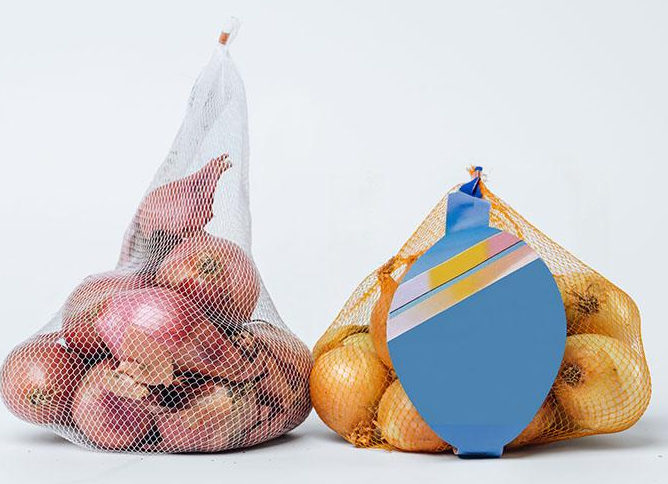
Packaging nets are lightweight mesh packaging, sold as tubes, bags or sleeves, that hold a product together, show it to the buyer and let it breathe. They are either knitted from yarn or extruded from molten polymer, they are made from plastic or from cellulose fibres, and they serve five main uses: fresh fruit and vegetables, meat, nonfood goods, bird food and glass bottles. The right net follows the product, the packing, line and the way the pack ends its life, not the price per metre.
A net weighs next to nothing. It still decides whether a bag of onions reaches the shelf dry or arrives with mould on the bottom layer.
That is the odd thing about packaging nets. They are the cheapest part of the pack and one of the few parts that can spoil the whole delivery. This guide covers how nets are made, which type suits which product, how the choice of material shapes the finished pack, what to put in a request so the first sample lands close to right, and how to judge a supplier.
What packaging nets are
Packaging nets are open mesh packaging made from plastic, usually polyethylene (PE) or polypropylene (PP), or from cellulose fibres. They come as continuous tubes on reels, as ready made bags or as sleeves cut to length.
The mesh does four jobs at once, it contains loose or awkward items, from a kilo of citrus to a whole ham. It lets air move, so moisture does not collect around produce that is still respiring after harvest. It shows the buyer the real product, with its colour, size and condition. And it weighs almost nothing, so a net uses a fraction of the material of a box or tray, which keeps freight costs down.
Knitted and extruded nets behave differently
Every packaging net is either knitted or extruded and that choice shapes everything after it. Knitted nets are made from monofilament or flat tepe yarn. They are soft and elastic, and they stretch around a product instead of forcing it into a shape. Extruded nets are formed in one step from molten polymer, so the strands are fused wherever they cross. They are firmer, hold their shape and give a clean, even look on the shelf.
Neither is better in general. A ham needs a net that stretches and grips through cooking. A bag of oranges on an automatic line needs a net that opens the same way thousands of times per shift. As a rule of thumb, knitted nets suit meat and shaped or irregular items, while extruded nets suit fruit and vegetable bags, bags with printed bands and toys.
Matching packaging nets to the product
Manufacturers usually group packaging nets by the job they do rather than by material. Five groups cover nearly every use.
Fruit and Vegetable Packaging
The largest group by volume. Onions, garlic, potatoes, citrus and nuts travel in nets because they keep respiring after harvest. Seal them in film and the water vapour condenses as soon as the pallet reaches the cold room. A net lets it escape.
Formats range from plain tubular net to Bags with Printed Bands, where an extruded net carries a printed band for the brand, the declaration and the barcode. Punnet Netting closes over berry and cherry trays. Cellulose Netting, made from wood based fibres, is the plasticfree option for lines where a retailer asks for one.
Nets for Meat Industry
Nets for meet industry are elastic nets shape and hold hams, roasts and rolled meats through curing, cooking and smoking. The demands are strict: food contact compliance, stable behaviour under heat and an even mesh that leaves a regular pattern on the surface. A related product, Shirred Casing Packaging Nets, keeps shirred sausage casings compact and protected in storage and transport, so they reach the stuffing machine undamaged.
Multipurpose packaging / Non food packaging
Toys, balls, bath sponges, firewood, small hardware. These products are often awkward in shape, and a box adds cost while hiding what the customer wants to see. A net holds a set together, shows it from every side and hangs on a hook. The priorities move away from airflow and towards load capacity and resistance to sharp edges.
Bird Food Nets
Fat balls and seed products are sold in nets because the net keeps them together in transport and on the shelf. The spec is about bird safety as much as strength. Look for a firm, even strand that does not fray, a suitable mesh size and clear handling instructions on the label.
Protective bottle sleeve
A tubular net slipped over a glass bottle stops glass touching glass and keeps labels from scuffing. Wineries, spirits producers and olive oil bottlers use sleeves for shipping, gift packs and online orders. In ecommerce a single bottle gets handled many more times than it would on a pallet going to one store.
Material decides how the pack ends its life
A net made from one polymer recycles far more easily than a pack that combines the net with a paper band and a metal clip, because the parts have to be separated first. In practice they often are not. When you compare offers, compare the whole pack, meaning the net, the band and the clip together, and not the mesh alone.
Two alternatives to conventional plastic are in regular use. Cellulose netting is made from wood based fibres, is biodegradable and is used for citrus, stone fruit, potatoes and onions. Compostable nets suit lines that sell on an environmental claim.
Whichever route you choose, ask the supplier for the material composition in writing. A claim on a sales sheet is not a specification.
What to settle before you order
Start with food contact. If the net touches food, ask for a declaration of compliance under specific regulations. Behind that paperwork should sit a certified production site. BRCGS Packaging Materials covers the safety, quality and compliance of packaging intended for food, ISO 9001 covers quality management and ISO 14001 covers environmental management.
Then check the physical specification. For produce, mesh size and open area matter more than color, because they control airflow. For every product, test at the heaviest pack you will run, and test after a drop from the conveyor, not on a lab bench. A net that holds on the bench and tears in the truck is the most expensive kind.
The figure that matters is the cost per packed unit, including line stoppages, manual repacking and complaints. A net that is a little cheaper but tears on the machine every few hundred packs is not cheaper. It just moves the cost to a different budget line.
So start with a trial. Send your supplier a sample of the product, the target pack weight and the machine type, ask for a short production run and put the packs through a real transport test before you sign a series order. A supplier who will not run a trial is telling you something.